
New Zealand's native flowers and what they mean
New Zealand's native flowers are unlike anyone else's. RNZ reports that about 85% of the country's 2,200 native flowering plants grow nowhere else, and that Christmas falls in their peak blooming season. Many carry Māori names with clear meanings and long histories. One thing to know before you fall in love with them: native flowers such as kōwhai, pōhutukawa and kākābeak are not sold as bouquet stock. Use them as inspiration for colours, card messages and garden gifts instead. Here is a field guide to the best known.
Kōwhai, the unofficial national flower
New Zealand has no official national flower, but the Department of Conservation calls the kōwhai "our unofficial national flower". Te Aka Māori Dictionary gives the meaning of kōwhai as "yellow", and the trees are known for hanging clusters of large yellow flowers in early spring.
- Species: eight, all endemic to New Zealand.
- Flowering: the common kōwhai flowers from August to October, sometimes from May.
- Meaning: Science Learning Hub records that once the kōwhai flowered, Māori knew it was time to prepare and plant the year's crops, including kūmara.
- Birds: tūī especially love its nectar.
- Caution: all parts are poisonous, the seeds most of all.
Warkworth celebrates it with a Kōwhai Festival beside the Mahurangi River, first held in 1970.
Pōhutukawa and rātā: the red of summer
Pōhutukawa has earned the title of New Zealand's Christmas tree for its blazing red flowers around Christmas time. It grows naturally in the upper North Island, north of New Plymouth and Gisborne, and flowers mainly in November and December. Its status is Not Threatened (2023), after a Threatened – Nationally Vulnerable rating in 2017. In Te Rerenga Wairua tradition at Cape Reinga, the spirits of the dead slide down a root of an ancient pōhutukawa into the sea on their journey onwards. Te Aka also records Pōhutukawa as a Matariki star that connects Matariki to the dead.
Rātā are its relatives: ten species, with brilliant red flowers from November to January depending on location. Bartlett's rātā has white flowers. Northern rātā is At Risk – Declining (2023), while southern rātā is common on Stewart Island/Rakiura and the Auckland Islands. Near Ngongotahā, a track up Mount Ngongotahā passes a rātā tree 40 metres tall.
Both are threatened by myrtle rust, a fungal disease now established in New Zealand. More in our Kiwi Christmas guide.
Ready to send? A local florist makes up and delivers the flowers.
Choose bouquetOrder by 2 pm on weekdays (11 am Saturdays) for same-day delivery in many areas
Mānuka and harakeke
Mānuka, also called kahikātoa, is abundant from the coast to low alpine areas. The New Zealand Plant Conservation Network records it flowering throughout the year, and lists it as Not Threatened (2023). As of 2018 there had been very few cases of myrtle rust on it.
Harakeke is best known as an important weaving plant, but it flowers too. Hawke's Bay Regional Council notes that harakeke flowers from late October through to February, on flower stalks (kōrari) up to five metres tall. The red flowers are pollinated by tūī, korimako and pihipihi.
Rare beauties: kākābeak and the Mount Cook buttercup
Kākābeak, or ngutukākā, takes its name from ngutu (beak or lips) and kākā (the native parrot), after the shape of its red flowers, which grow in clusters of 15 to 20. It is best seen in September and October. In the wild it is Nationally Critical and found only in New Zealand, yet RNZ notes it is common in gardens and among the largest native flowers in Aotearoa.
The Mount Cook buttercup is the world's largest buttercup, not a lily as it is sometimes called. It grows in the South Island mountains, from Marlborough to Stewart Island, at 700 to 1,500 metres, and flowers from October to January. We found no Māori name for it in the sources we used.
White flowers: puawānanga, rengarenga and edelweiss
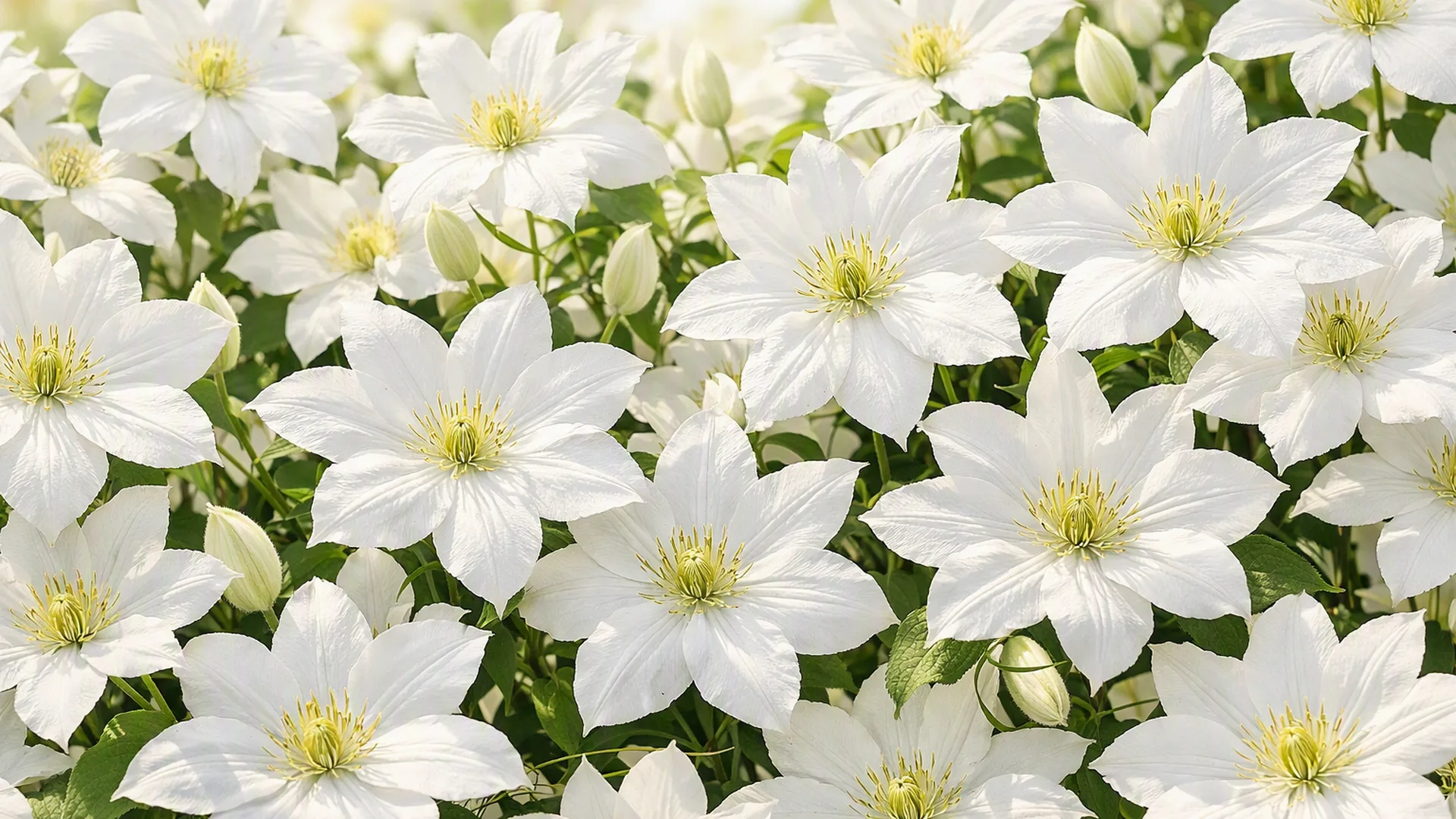
- Puawānanga, the native clematis, is an endemic climber with white, showy flowers from July to November. Te Aka records an 1872 account of clematis garlands placed in a grave as a token of affection, a moving image for a sympathy card.
- Rengarenga, also called the renga lily or rock lily, has white flowers from November to December. Te Papa notes it is thought to have been cultivated for its edible rootstock.
- New Zealand edelweiss comes in separate South Island and North Island species, both flowering from November to March on alpine rock.
Using native flowers as a theme, safely
Since native flowers aren't sold as cut flowers, here are ways to bring them into a gift:
- Colour: yellow for kōwhai in spring, deep red for pōhutukawa and rātā at Christmas, white for puawānanga in winter.
- The card: a line about what the flower means, such as kōwhai marking the season for planting, or clematis garlands as a token of affection.
- A garden gift: kākābeak is common in gardens even though it is rare in the wild.
Some natives are poisonous. The NZ Plant Conservation Network lists karaka, kōwhai, ongaonga, ngaio and tutu among poisonous natives, and SPCA New Zealand warns that karaka berries can be fatal to dogs. If the recipient has pets, read our pet-safe flowers guide first. For month-by-month timing, see what's in season.
Ready to send? A local florist makes up and delivers the flowers.
Choose bouquetOrder by 2 pm on weekdays (11 am Saturdays) for same-day delivery in many areas
Related guides
What's in season: a New Zealand flower calendar
A southern-hemisphere flower calendar for New Zealand: what blooms in spring, summer, aut…
Where New Zealand's flowers come from
How New Zealand's flower industry works: what local growers export, where imported roses …
Pet-safe flowers in New Zealand
Which flowers are risky for cats and dogs in New Zealand, which are safer, which native p…
Hay fever season and sending flowers
About 1 in 5 New Zealanders have hay fever. When pollen season peaks, what really causes …
Making flowers last in a Kiwi summer
Why heat shortens the life of cut flowers, how New Zealand's regional summers differ, and…