
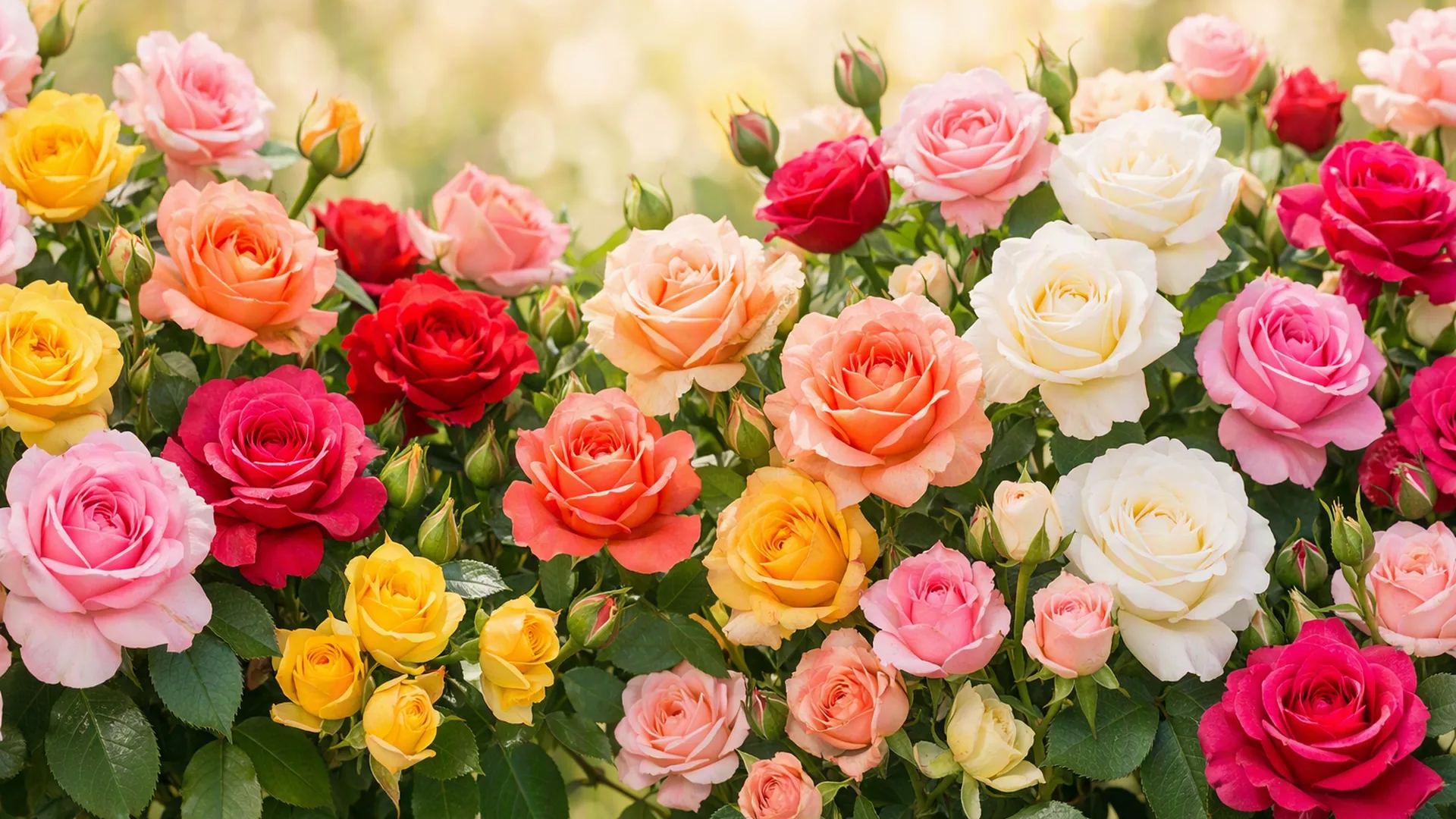
Making flowers last in a Kiwi summer
A bouquet that arrives on a 30-degree day has a harder life than one delivered in July. New Zealand's summers range from humid in Auckland to bone-dry in Central Otago, with hot, drying nor'westers in Canterbury, and each puts flowers under stress in its own way. We have looked at the science of why heat matters and at what NIWA says about each region's summer, so you can give your flowers the best chance. The tips work just as well for the person sending a bouquet as for the person putting it in a vase.
Why warmth ages cut flowers
Cut flowers keep living after they are picked: they breathe, using up the sugars stored in their stems and flower heads. Research published in Acta Horticulturae (Tshwenyane and Bishop, 2009) found that a flower's respiration rises steeply with temperature, and that high temperature led to faster use of stored reserves and faster ageing. In the same study, roses held dry at 15°C or 25°C did not survive eight days of storage, while roses kept at 2°C did.
The lesson for a home is simple: the cooler the flowers, the slower they age. We can't tell you how many days a bouquet will last in your town, because no source we found measures vase life for New Zealand conditions, but keeping it cool will always help.
Your region's summer, according to NIWA
- Auckland: NIWA describes summers as warm and humid, with mild winters and few frosts. Humid heat still speeds up ageing, so keep flowers out of sunny rooms.
- Wellington: generally sunny and windy compared with other parts of New Zealand. In Wellington the average wind speed is about 27 km/h, so keep vases away from open windows and draughty doorways.
- Canterbury: during nor'west foehn episodes, daily maximum temperatures in summer often exceed 30°C, with exceptional evaporation. Rangiora holds New Zealand's highest official temperature, 42.4°C on 7 February 1973, and Timaru reached 41.3°C in February 2011.
- Central Otago: the driest region in New Zealand, with less than 400 mm of rain a year, and summer highs that can exceed 30°C inland. Around Alexandra, summer highs reach the mid-30s.
- Hawke's Bay and the Bay of Plenty: Hastings is warm and dry, with summer days that often reach the low 30s, and Whakatāne has frequently recorded the highest annual sunshine hours in New Zealand, often more than 2,600 hours a year. Strong sun through a window can warm a vase quickly.
On hot, dry or windy days, water evaporates faster from the vase, so it needs checking more often.
Ready to send? A local florist makes up and delivers the flowers.
Choose bouquetOrder by 2 pm on weekdays (11 am Saturdays) for same-day delivery in many areas
The first hour after delivery
What happens when the flowers arrive matters most in summer.
- Get them inside. A bouquet left on a sunny doorstep or in a hot car heats up quickly. If you are sending, give an address where someone will be home, and add a phone number or delivery note so the flowers aren't left in the sun.
- Get them into water. If the bouquet comes in its own water pouch or box, keep it upright and move it into a vase as soon as you can.
- Choose the coolest room. Away from direct sun, windowsills, heaters and appliances that run warm.
- Keep it out of the wind. Draughts and open windows dry flowers out, especially on windy or nor'west days.
Day-to-day habits that help
- Top up the water every day in hot weather, and replace it if it turns cloudy.
- Remove fading flowers so the rest of the bouquet stays fresh-looking.
- Move the vase somewhere cooler at night if your living room heats up in the afternoon sun.
- Remove lily pollen if there is a cat in the house: SPCA New Zealand names lilies as a cause of sudden kidney failure in pets. See our pet-safe flowers guide.
What about the water itself?
People sometimes ask whether hard or soft tap water makes a difference. Most New Zealand tap water is soft: Wellington's metropolitan water is described as soft, and Auckland's groundwater sources fall in the soft or moderately hard range. We found no source linking New Zealand water hardness to how long cut flowers last, so we don't give regional water tips. Clean, fresh tap water is all a bouquet needs, topped up often on warm days.
Timing a delivery around the heat
If you are sending flowers in summer, a little planning helps them arrive in good shape:
- Order early in the day, so the bouquet isn't sitting in a hot vehicle late in the afternoon.
- Avoid weekends and public holidays when someone may be away; delivery on those days is limited in many areas anyway.
- Allow longer for rural addresses with an RD number, which can take longer to reach.
- Plan around Christmas. The holiday season falls in midsummer, so see our Kiwi Christmas guide for dates and ideas.
Ready to send? A local florist makes up and delivers the flowers.
Choose bouquetOrder by 2 pm on weekdays (11 am Saturdays) for same-day delivery in many areas
Related guides
New Zealand's native flowers and what they mean
Kōwhai, pōhutukawa, rātā, mānuka, kākābeak and more: when New Zealand's native flowers bl…
What's in season: a New Zealand flower calendar
A southern-hemisphere flower calendar for New Zealand: what blooms in spring, summer, aut…
Where New Zealand's flowers come from
How New Zealand's flower industry works: what local growers export, where imported roses …
Pet-safe flowers in New Zealand
Which flowers are risky for cats and dogs in New Zealand, which are safer, which native p…
Hay fever season and sending flowers
About 1 in 5 New Zealanders have hay fever. When pollen season peaks, what really causes …